The Evolution of Personal Computers
Discover how computers evolved from massive machines in the 1940s to the powerful laptops and desktops we use today.
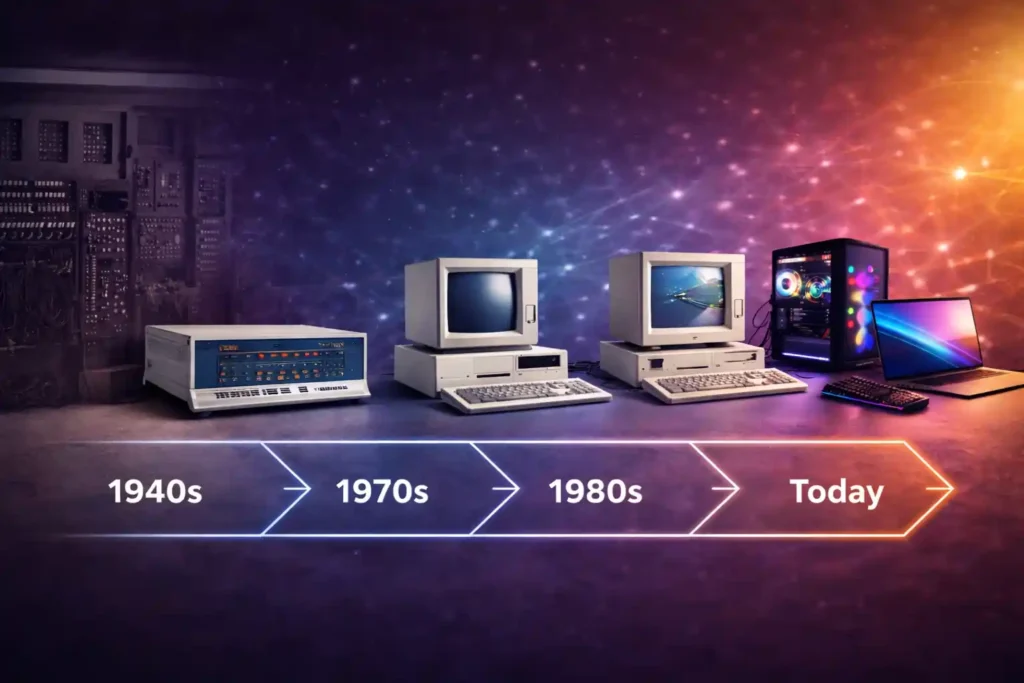
Timeline of Personal Computer History
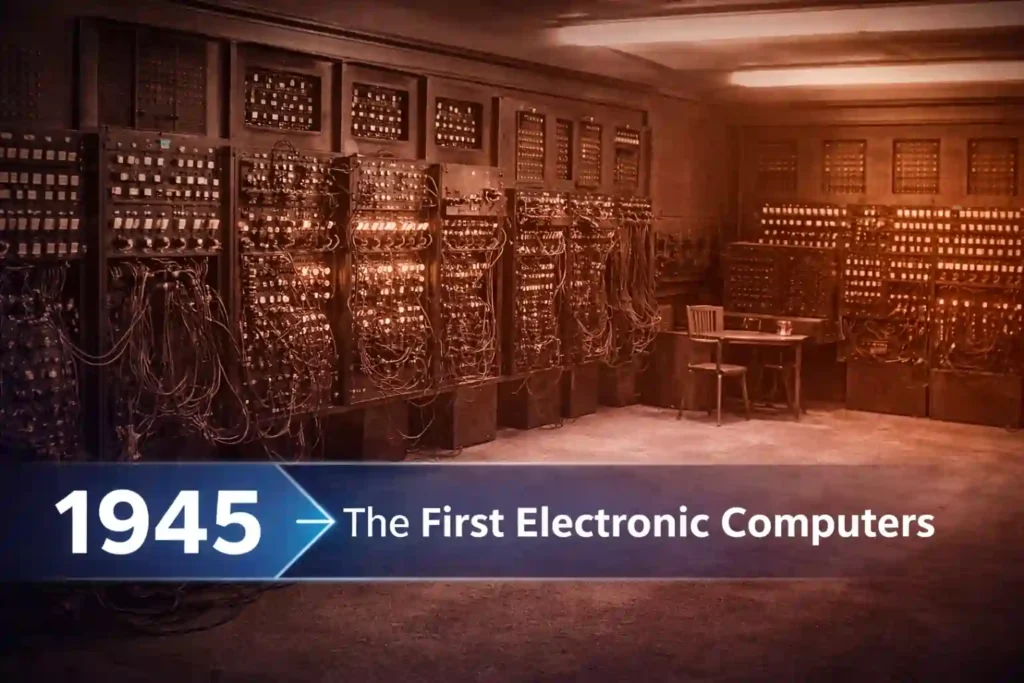
The Early Days of Computing (1940s – 1960s)
The first computers were enormous machines designed primarily for scientific calculations and military applications.
One of the earliest examples was ENIAC, developed in 1945. This machine weighed over 27 tons and occupied an entire room. Unlike modern computers, early systems required manual programming using switches and cables.
During this era, computers were extremely expensive and were used mainly by:
governments
universities
large corporations
They were far from the compact and affordable personal computers we know today.
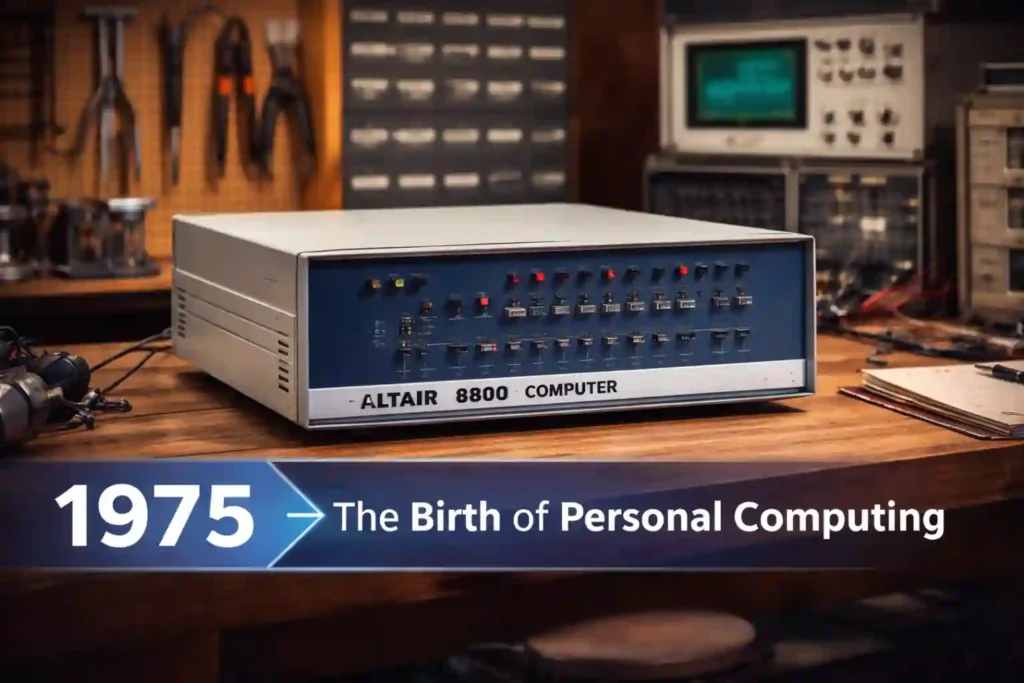
1975 – The Birth of Personal Computing
The concept of a personal computer began to emerge in the 1970s. This period marked the transition from large institutional computers to smaller machines that individuals could use.
One of the most influential systems of this era was the Altair 8800, released in 1975. Although primitive by today’s standards, it inspired a new generation of programmers and entrepreneurs.
Around the same time, companies like Apple and Commodore started developing computers aimed at home users.
These early personal computers laid the foundation for the modern PC industry.
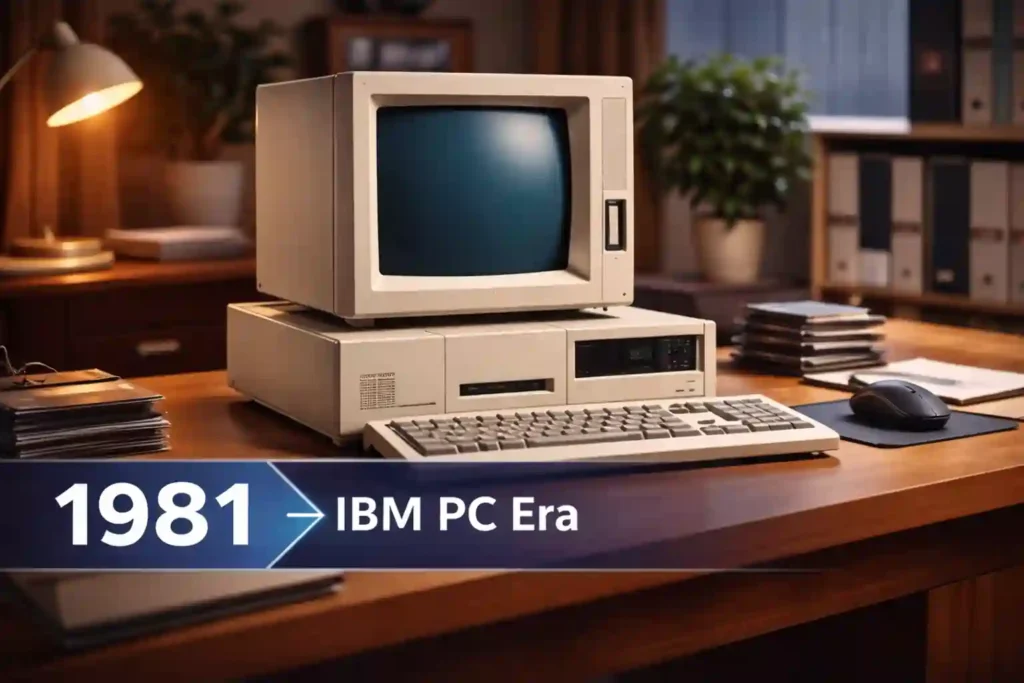
1981 – IBM PC Era
The 1980s are often considered the golden age of personal computers.
In 1981, IBM introduced the IBM PC, which quickly became the industry standard. This system popularized the term “PC” and encouraged the development of compatible hardware and software.
Key developments during this decade included:
the rise of Microsoft DOS
the introduction of graphical interfaces
the expansion of software applications
Computers began appearing in offices, schools, and homes across the world.
The Rise of Windows and Modern PCs (1990s)
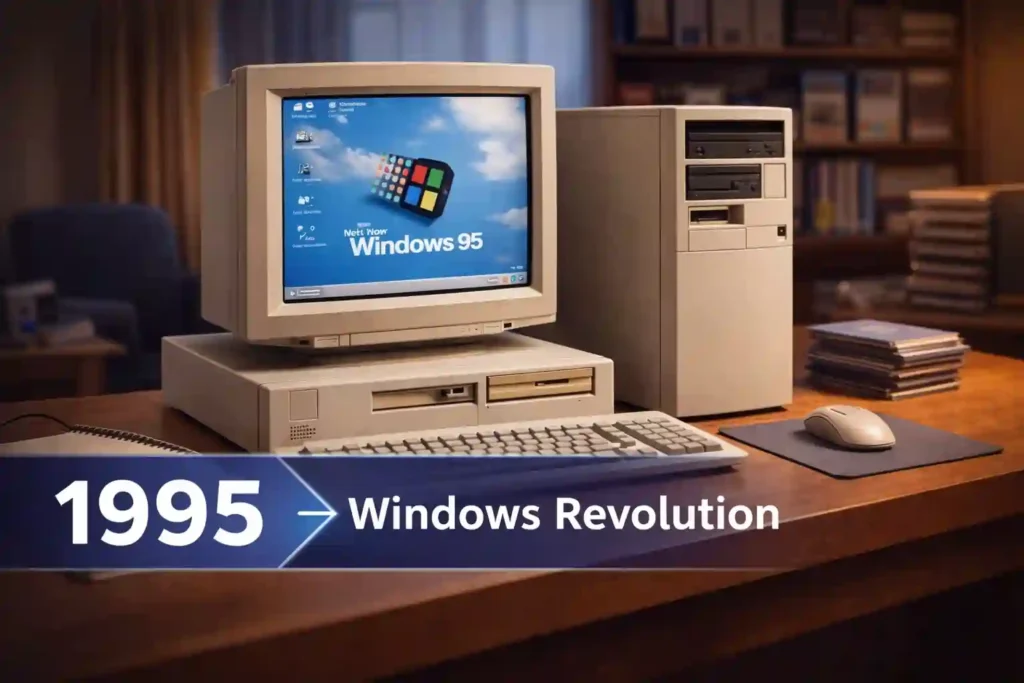
The 1990s saw the explosion of personal computing thanks to graphical operating systems.
Microsoft released Windows 95, which introduced a user-friendly interface and features like the Start Menu and taskbar. These innovations made computers easier to use for everyday users.
During this period, computers became:
faster
more affordable
more powerful
The internet also began spreading rapidly, transforming computers into essential tools for communication and information access.
The Laptop Era and Mobile Computing (2000s)
In the early 2000s, laptops started becoming more popular than traditional desktop computers.
Advances in hardware allowed manufacturers to create devices that were:
lighter
faster
more energy efficient
Wireless internet, improved batteries, and compact designs made laptops ideal for students, professionals, and travelers.
The Modern PC Era (2010s – Today)
Today’s personal computers are more powerful than ever before.
Modern PCs feature:
multi-core processors
solid-state drives (SSD)
high-resolution displays
advanced graphics cards
Laptops, gaming PCs, and compact desktops are now used for everything from office work to professional video editing and gaming.
Additionally, the rise of cloud computing and artificial intelligence continues to reshape how computers are used.
The Future of Personal Computers
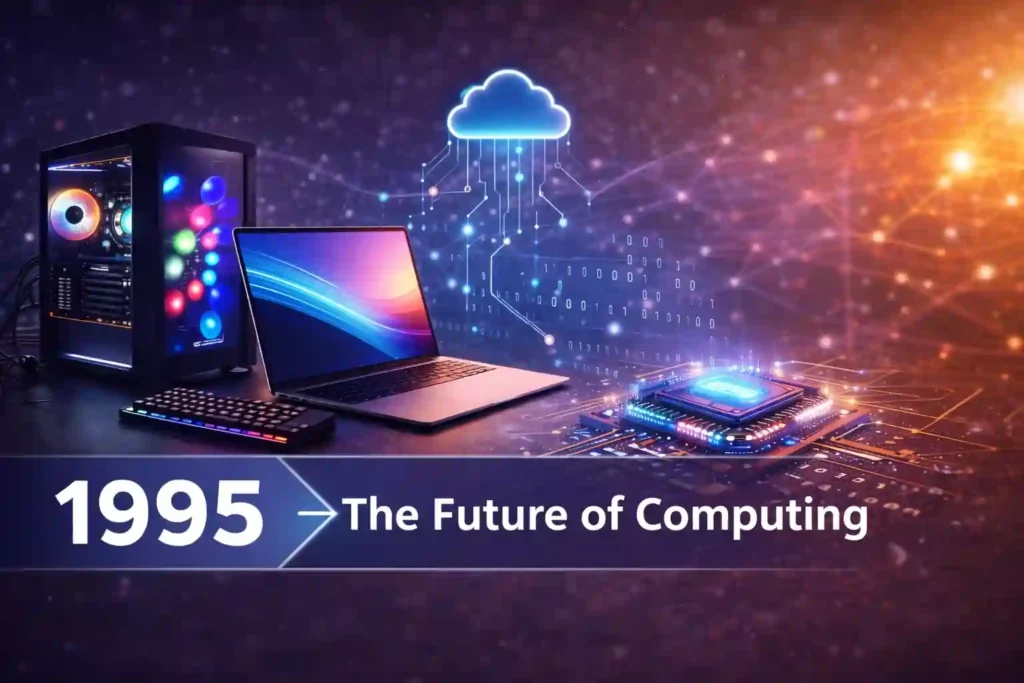
The future of PCs is likely to be shaped by innovations such as:
artificial intelligence integration
more powerful mobile processors
cloud-based computing environments
improved battery technologies
While smartphones and tablets have become popular, personal computers remain essential for productivity, development, gaming, and creative work.
Conclusion
The history of personal computers reflects decades of innovation and technological progress. From room-sized machines to powerful portable devices, computers have evolved dramatically.
Today, PCs are an essential part of daily life, enabling people around the world to work, learn, and connect in ways that were once unimaginable.
As technology continues to advance, the personal computer will remain a cornerstone of the digital age.